Crust & Crumb Interactive Bread Baking GlossaryLearn the language.
Read the dough.

A free, searchable reference to 280 bread-baking terms, working techniques, and guided learning paths. Built for the bake in front of you.

Written by baker Henry Hunter, founder of Baking Great Bread at Home and Crust & Crumb Academy, for home bakers learning sourdough, artisan bread, fresh-milled flour, and ancient grains.

280
terms and techniques
6
guided paths
Free
to use and share
Recipe Pantry
Good bread starts with understanding.

Guided paths

Choose a way in

Diagnose a problem

What went wrong with the loaf?

Pick the symptom you can see. You'll get the causes first, then the fixes.
280 of 280
Scientific/TechnicalIntermediate

The sharp, vinegar-like acid in sourdough, made by some of the bacteria in a starter. It gives a stronger, tangier bite than lactic acid. Cooler, stiffer fermentation tends to favor acetic acid, so a stiff starter or a long cold retard usually makes a more noticeably sour loaf.
IngredientBeginner

A form of commercial yeast with larger, coarser granules than instant yeast. The classic method is to dissolve it in warm water (blooming, or proofing the yeast) before mixing, and many recipes still call for that step. Newer active dry yeast can usually go straight into the dry ingredients too, so follow the instructions on your package. It's a bit slower than instant yeast; if you're swapping it in for instant, use about 25% more.

Grain & MillingAdvanced

Flour that's been allowed to rest after milling so it can oxidize, which tends to make dough stronger and more predictable. Mills once aged flour for weeks, and today oxidizing agents like ascorbic acid are often used to get a similar effect. Fresh-milled flour can behave differently in its first days, and some bakers find it slacker, but many home bakers use it right away and adjust hydration and handling.

Grain & MillingAdvanced

Aleurone Layer

/ˈæl.jə.roʊn/

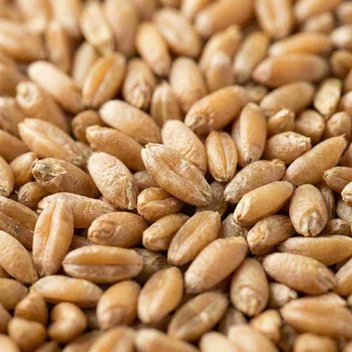
A thin layer of cells between the bran and the starchy endosperm. Botanically it belongs to the endosperm, but in milling it comes off with the bran. It's rich in protein, minerals, and enzymes, so a lot of whole-grain flavor and enzyme activity is lost when it's sifted out.

Aleurone Layer: close macro of a wheat kernel showing its layers
ToolIntermediate

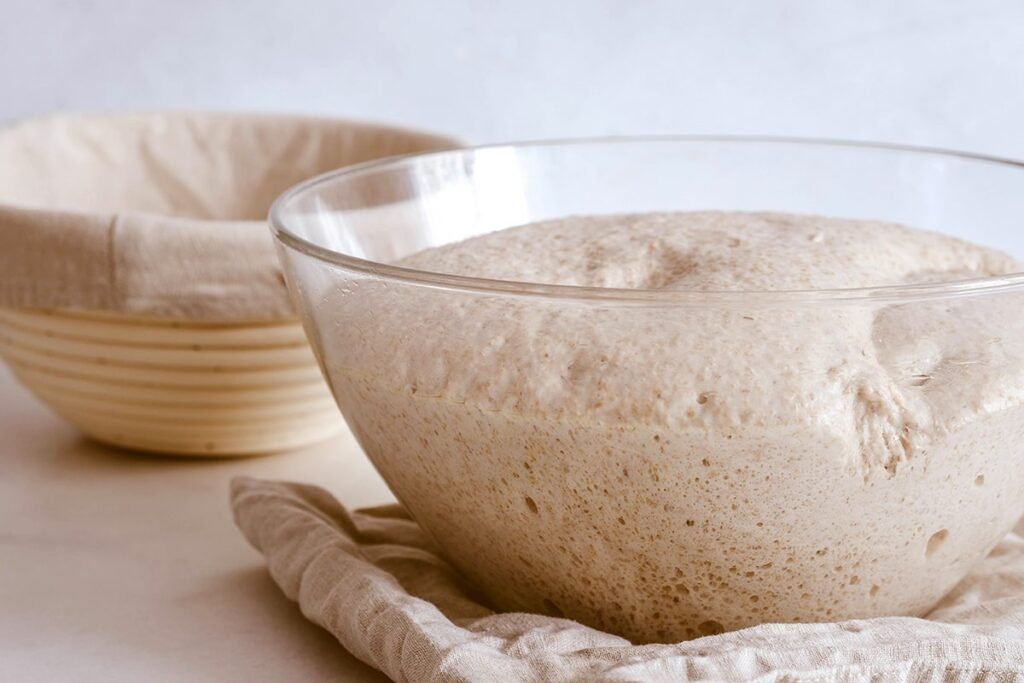
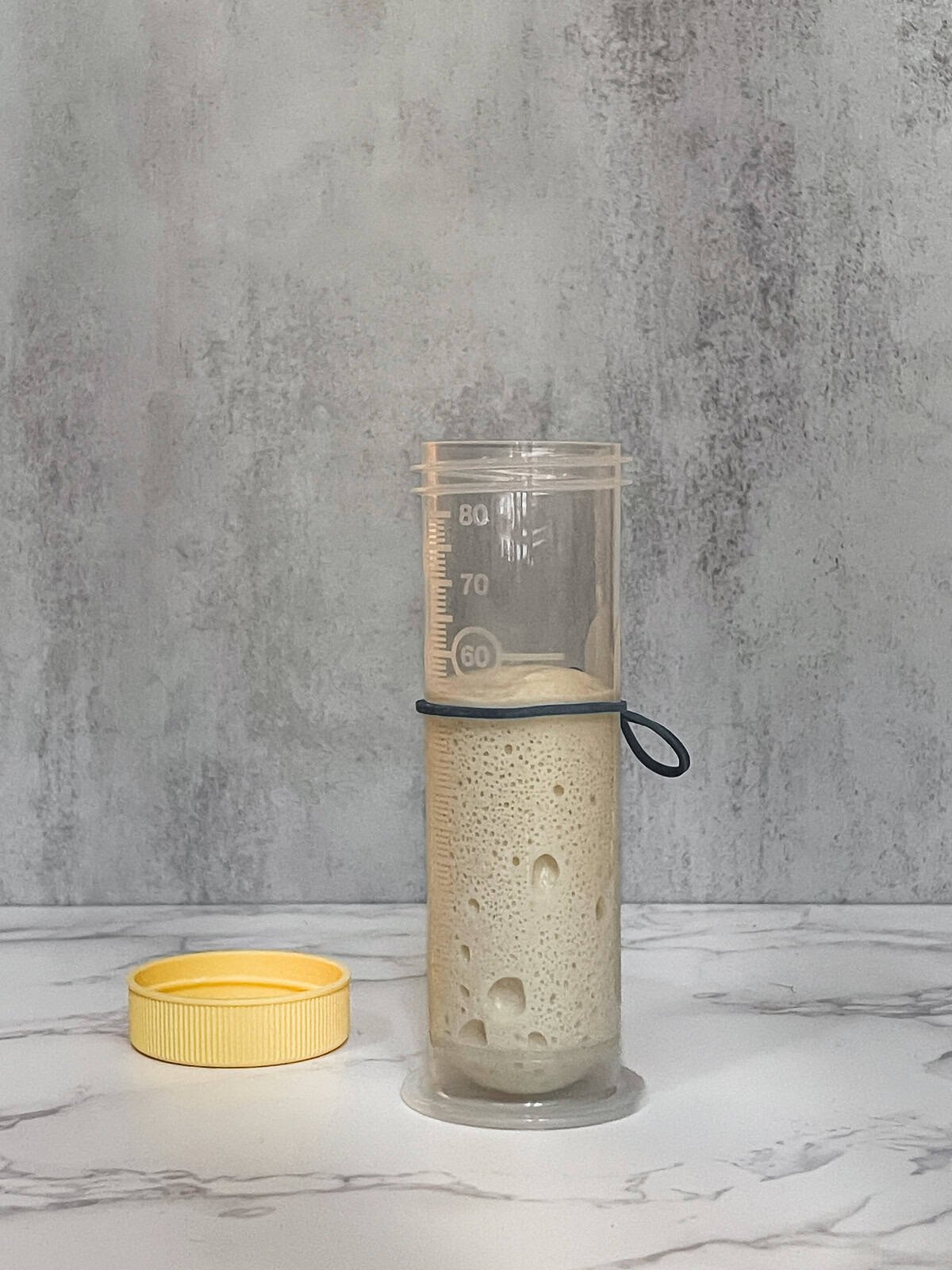
A small, straight-sided jar or container holding a sample of your dough, taken right after mixing, so you can track how much the dough has risen during bulk fermentation. Because it's easy to see the level in a straight-sided container, it gives you a clear read on percentage rise that's hard to judge in a big bowl. It's most useful alongside the look and feel of the main dough.

Aliquot Jar: dough sample in a straight-sided jar beside the bulk dough
IngredientBeginner

A medium-protein flour designed to do everything reasonably well. While it can make bread, it produces a softer, less chewy loaf than bread flour.

Grain & MillingBeginner

Amaranth

/ˈæm.ə.rænθ/

A tiny seed from a broadleaf plant, not a grass, so it's a pseudocereal. It was an important crop in Mesoamerica and the Andes long before European contact. Amaranth is gluten-free, with an earthy, slightly grassy flavor. Bakers use the flour in small amounts or in gluten-free blends, and the whole seeds can be popped or cooked and added to bread.

ProcessAdvanced

An enzyme naturally present in flour (and saliva!) that breaks down complex starches into simple sugars. Yeast then eats these sugars to produce carbon dioxide.

Grain & MillingBeginner

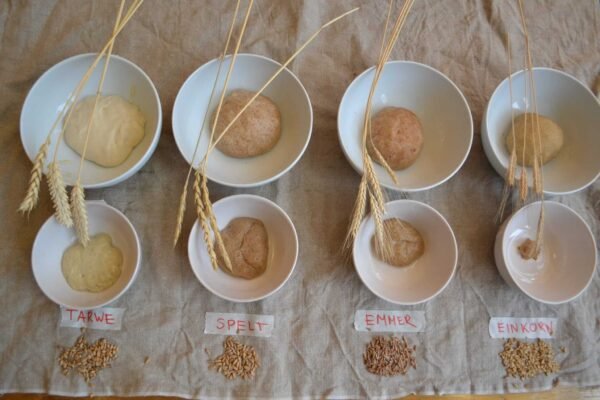
A culinary and marketing term for grains that have changed little through modern plant breeding, like einkorn, emmer, spelt, khorasan, teff, millet, and sorghum. There's no fixed scientific definition, so which grains make the list depends on who's using the label. Ancient doesn't mean gluten-free: the ancient wheats all contain gluten, and they usually ferment, absorb water, and build structure differently from modern bread wheat.

Ancient Grain: several actual grain varieties side by side (einkorn, emmer, spelt, rye)
Related Tool
IngredientAdvanced

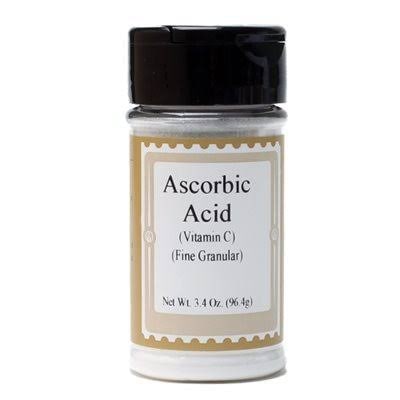
Also known as Vitamin C, this is often added to bread recipes in tiny amounts to strengthen the gluten network and help the dough hold its shape during a long rise.

A bottle labeled Ascorbic Acid (Vitamin C), a dough-strengthening ingredient used in small amounts in bread baking
RelatedGluten
Scientific/TechnicalAdvanced

The mineral residue measured after a flour sample is burned in a controlled laboratory test, usually expressed as a percentage. Ash helps describe flour refinement and regional flour types. It is not a direct measure of protein quality, gluten strength, or enzyme activity.

Sources last checked

TechniqueIntermediate

Autolyse

/ˈɔː.təˌlaɪz/

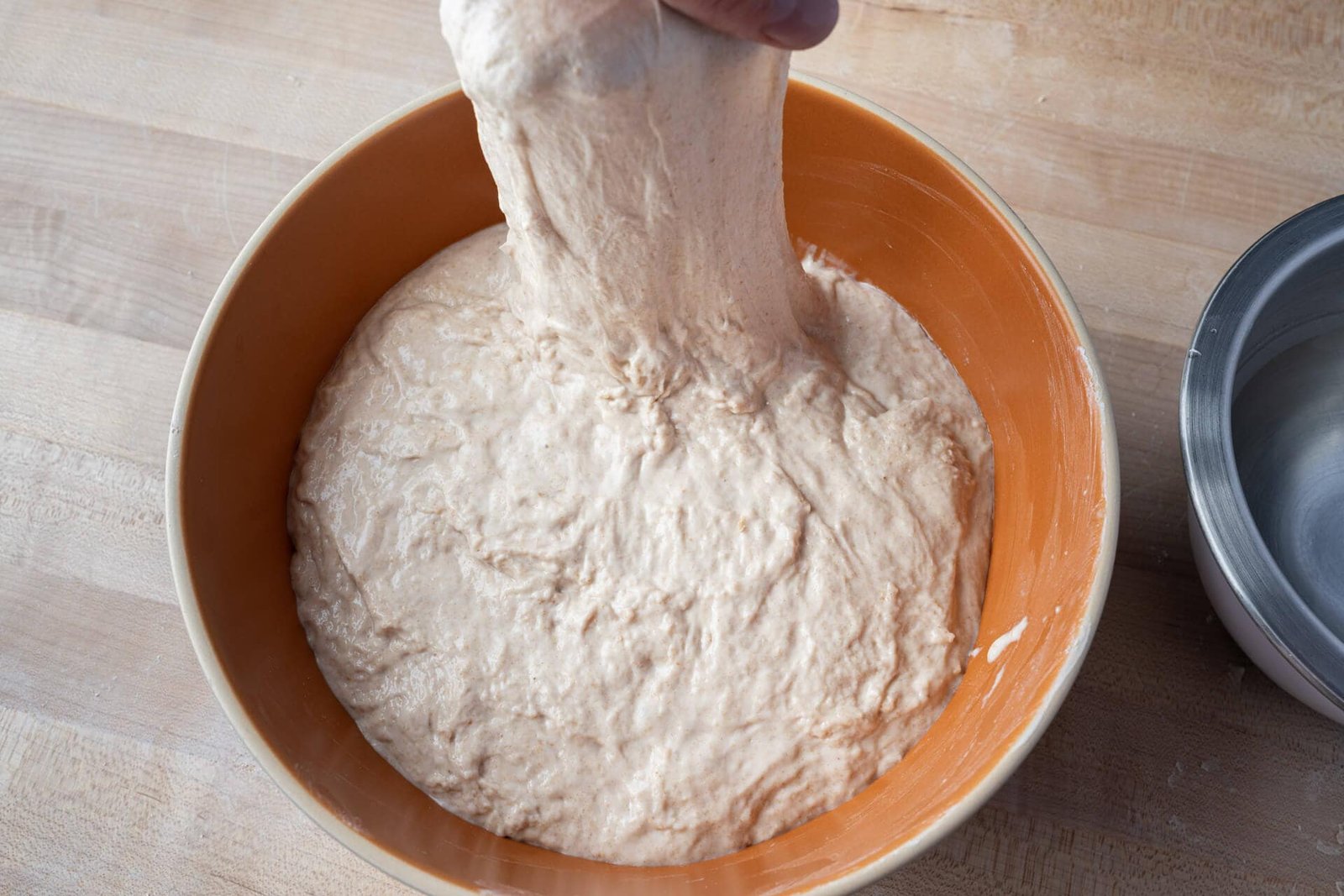
A resting period where flour and water are mixed and left to sit (typically 30 minutes to 2 hours) before adding salt and starter/yeast. During this time, enzymes naturally present in the flour begin breaking down proteins and starches, making the dough easier to work with and improving gluten development.

Autolyse: flour and water just mixed into a rough shaggy dough, unkneaded
BreadIntermediate

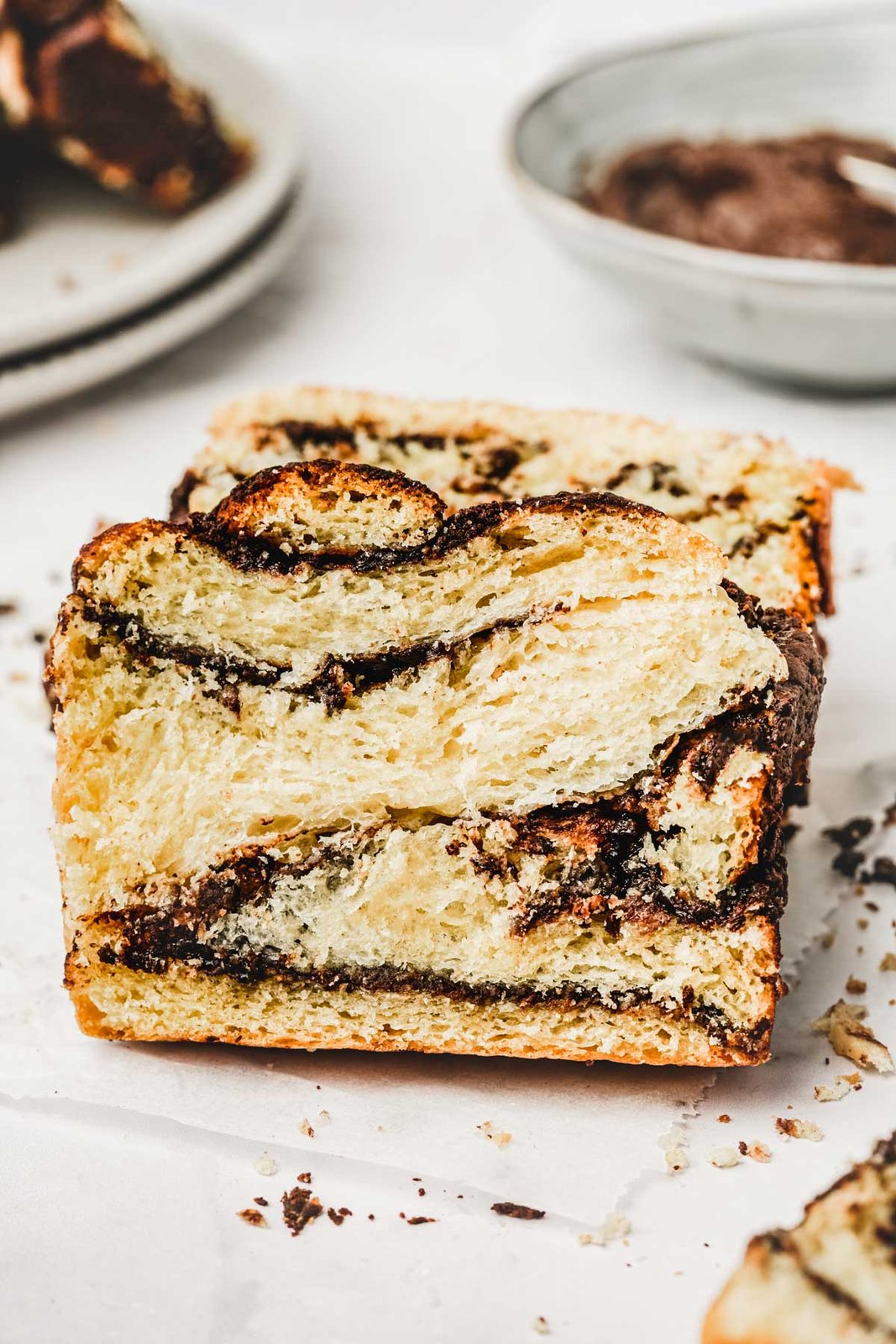
A sweet, braided bread originating from Jewish communities in Poland and Ukraine. The dough is rolled out, spread with filling (chocolate or cinnamon), rolled into a log, cut, and twisted before baking.

Babka: chocolate babka, sliced to show the swirl
BreadIntermediate

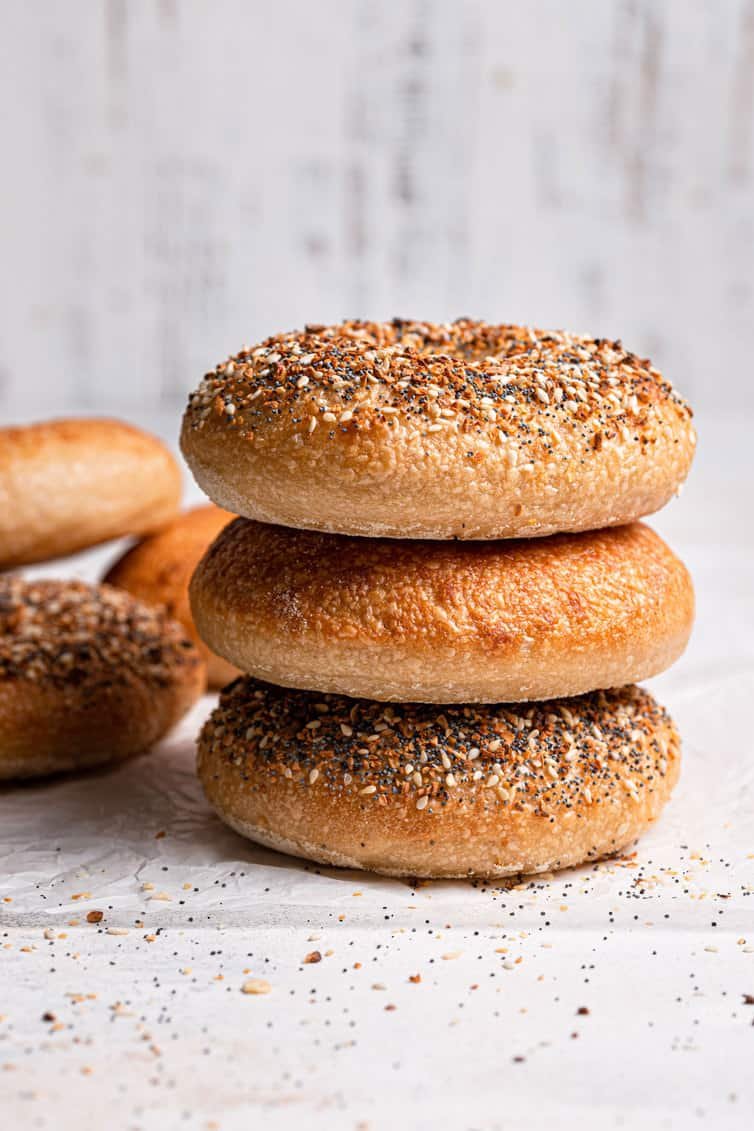
A ring-shaped bread that is boiled in water (often with malt or honey) before baking. The boiling step gelatinizes the crust starch, giving bagels their signature shine and chew.

Bagel: homemade bagels
BreadAdvanced

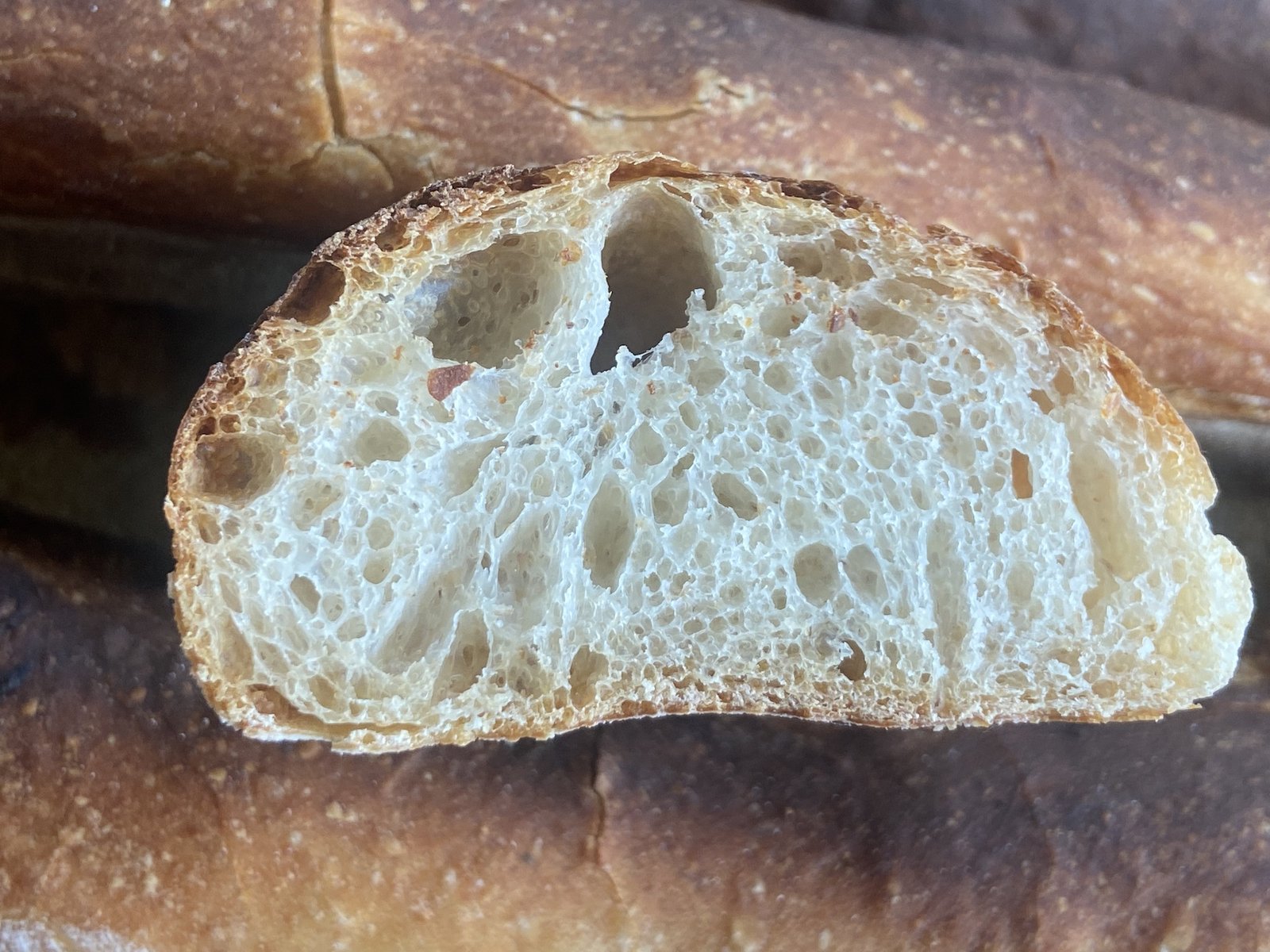
A long, thin loaf of French bread characterized by a crisp crust and large, irregular holes in the crumb. It requires careful shaping and handling to preserve the air bubbles.

Baguette: finished baguette, cut to show the crumb
ToolAdvanced

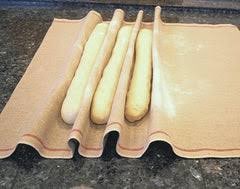
A heavy linen cloth used to support dough (like baguettes) while they proof. The fabric is folded up between loaves to help them hold their shape and prevent them from sticking to each other.

Long bread dough pieces proofing in the folds of a baker's couche
Scientific/TechnicalAdvanced

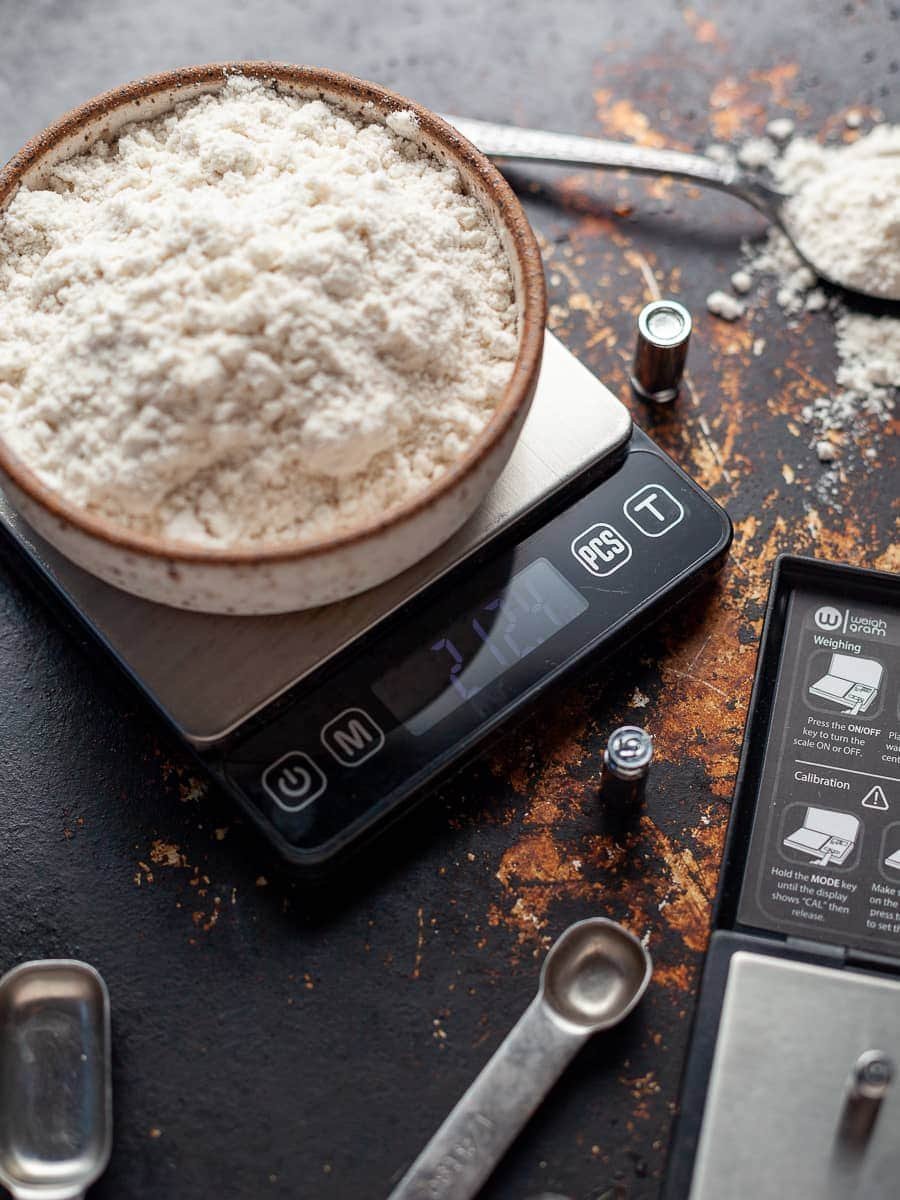
A system where all ingredients are expressed as a percentage of the flour weight. Flour is always 100%, and everything else is a ratio to that. For example: 500g flour, 350g water = 70% hydration (350÷500). This makes recipes scalable.

Baker's Percentage: kitchen scale with flour and water, simple weights visible
RelatedHydration
IngredientBeginner

A chemical leavener made of baking soda, a dry acid, and a little starch to keep it dry. When it gets wet the soda and acid react and release carbon dioxide, and most supermarket baking powder is double-acting, so it gives a second burst of gas in the oven's heat. It's what lifts quick breads, biscuits, muffins, and many sourdough discard recipes.

IngredientBeginner

Sodium bicarbonate, an alkaline leavener that needs an acid to work. Mixed with something acidic like buttermilk, yogurt, molasses, or sourdough discard, it releases carbon dioxide right away and lifts the batter. It's roughly three to four times stronger than baking powder, so small measuring mistakes show up fast as a soapy or metallic taste.

ToolAdvanced

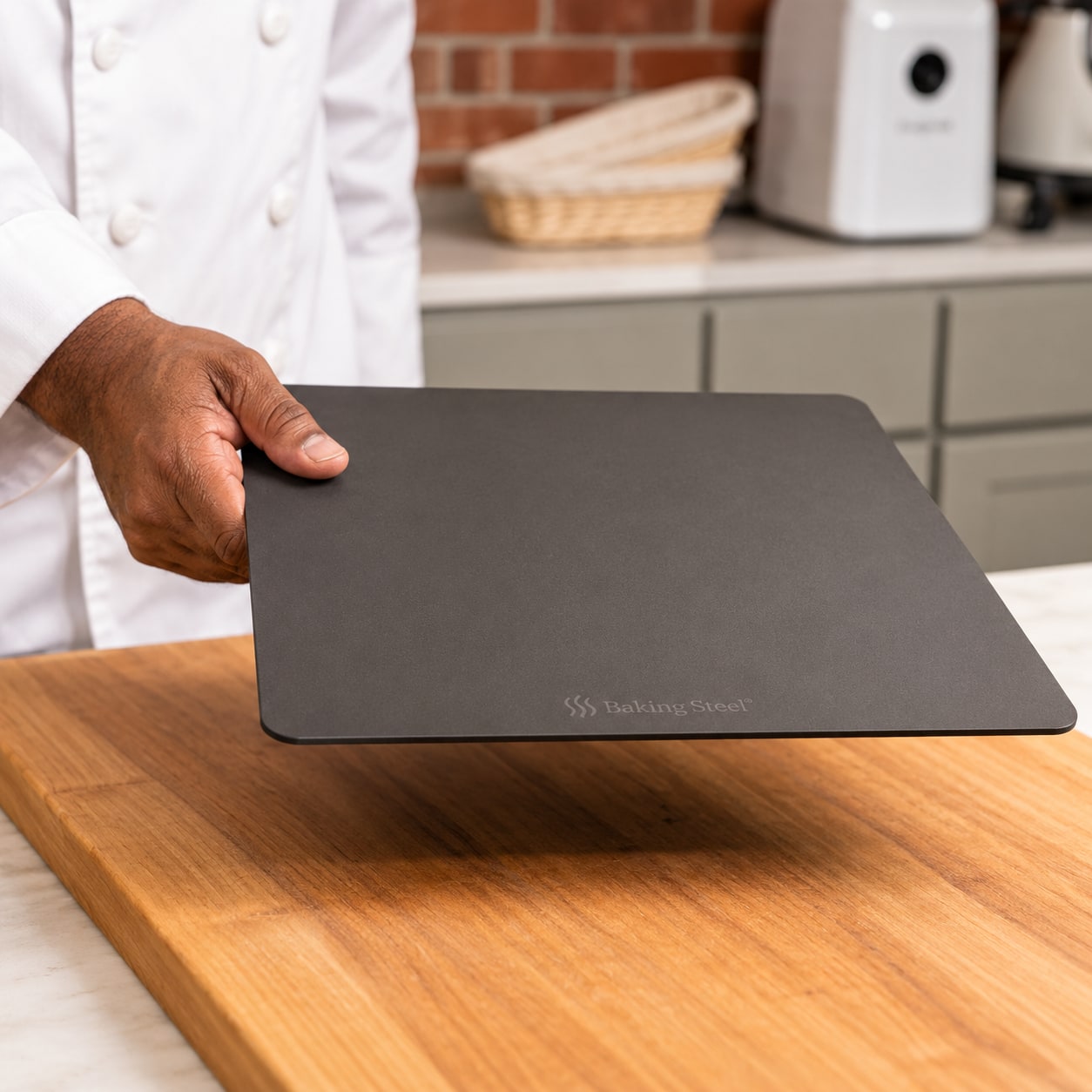
A thick plate of solid steel used as a baking surface. Because steel conducts heat 18x faster than ceramic stone, it delivers a massive blast of heat to the dough, resulting in incredible oven spring and blistering crusts.

A baker holding a rectangular Baking Steel plate above a wooden work surface

Some equipment and partner links are affiliate links. Henry may earn a commission from qualifying purchases.

Brød & Taylor Bread Steel Max
ToolBeginner

A flat slab of ceramic or cordierite designed to hold heat and bake bread/pizza evenly. It is gentler than steel, making it better for longer bakes where you don't want the bottom to burn before the inside is cooked.

ToolBeginner

Banneton

/ˈbæn.ɪ.tɒn/

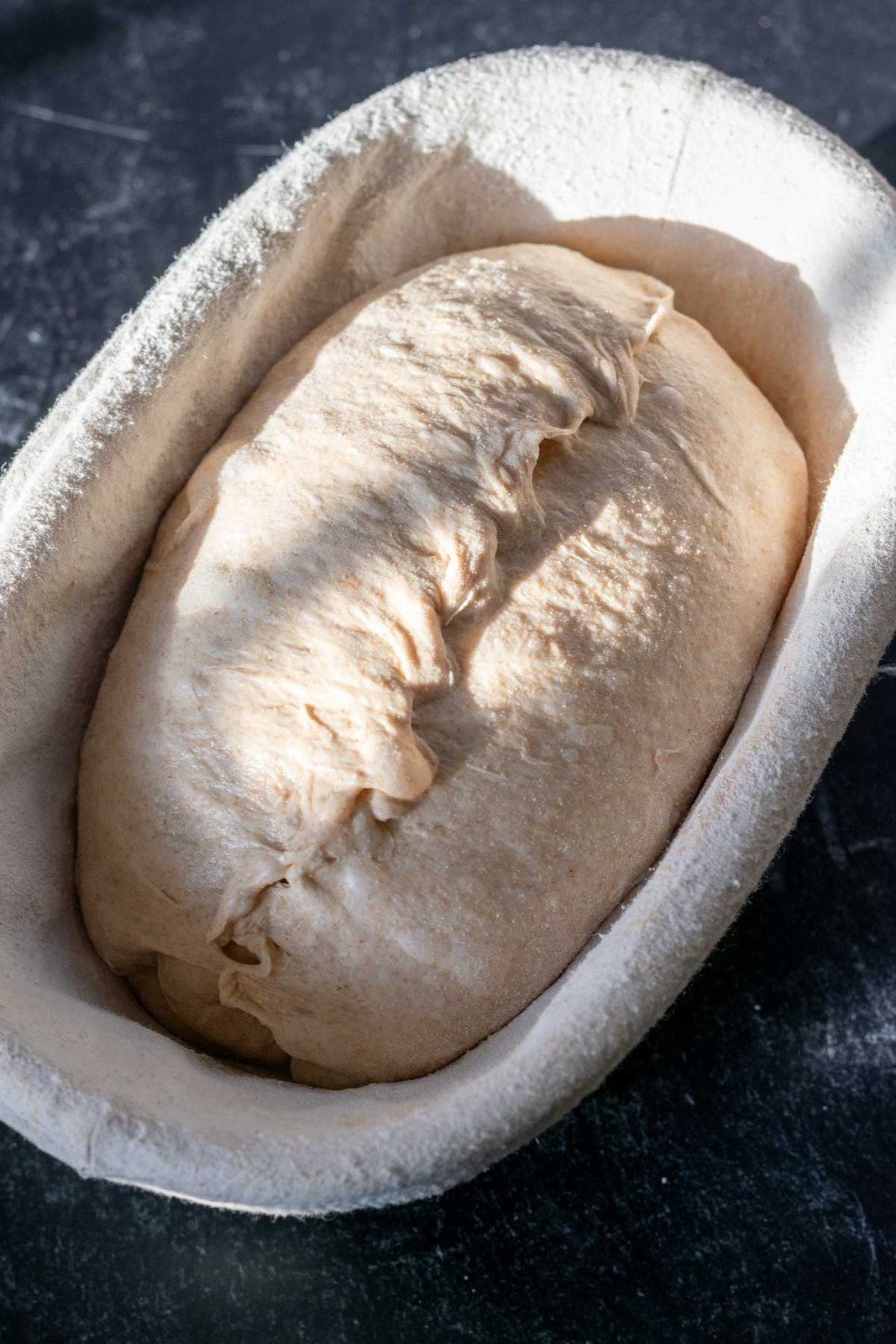
A basket used for proofing shaped bread dough, traditionally made from cane or rattan. The basket provides structure and support during the final rise and creates distinctive circular ridges on the loaf's surface.

Banneton: dough proofing in a rattan banneton basket

Some equipment and partner links are affiliate links. Henry may earn a commission from qualifying purchases.

Brød & Taylor Proofing Container
ToolBeginner

A linen or cotton cloth cover for a proofing basket. It prevents sticky dough from getting stuck in the basket's crevices and creates a smooth surface on the loaf, which is ideal for intricate scoring.

Some equipment and partner links are affiliate links. Henry may earn a commission from qualifying purchases.

Brød & Taylor Proofing Container
TroubleshootingBeginner

When dough grabs onto the banneton or its liner and tears or deflates as you turn it out. It's most common with wet doughs, long cold proofs, new baskets that haven't built up a flour coating yet, and dough that's overproofed. The fix is usually better dusting, with rice flour or a rice and wheat flour mix.

Some equipment and partner links are affiliate links. Henry may earn a commission from qualifying purchases.

Brød & Taylor Proofing Container
Grain & MillingBeginner

An ancient cereal grain used for food, animal feed, and malting. It contains gluten-related proteins (hordeins), so it isn't safe for celiac disease, but those proteins don't form a bread dough, so barley flour is usually blended with wheat. Malted barley is the source of diastatic and non-diastatic malt, which bakers add for enzyme activity, color, and flavor.

TechniqueAdvanced

A technique of holding back some water from the initial mix and adding it slowly later in the mixing process. This helps develop gluten faster before the dough becomes super wet.

Bassinage: held-back water being worked into dough
BreadIntermediate

Batard

/bəˈtɑːrd/

An oval or football-shaped loaf. This shape is often preferred by bakers because it yields more uniform slices than a round boule.

Batard: Finished oval batard

Some equipment and partner links are affiliate links. Henry may earn a commission from qualifying purchases.

Brød & Taylor Baking Shell (Batard) & Steel
BreadIntermediate

The rounded part of the loaf that expands and opens up during the bake, usually right next to the 'ear.' A big belly indicates strong fermentation and good shaping tension.

ProcessIntermediate

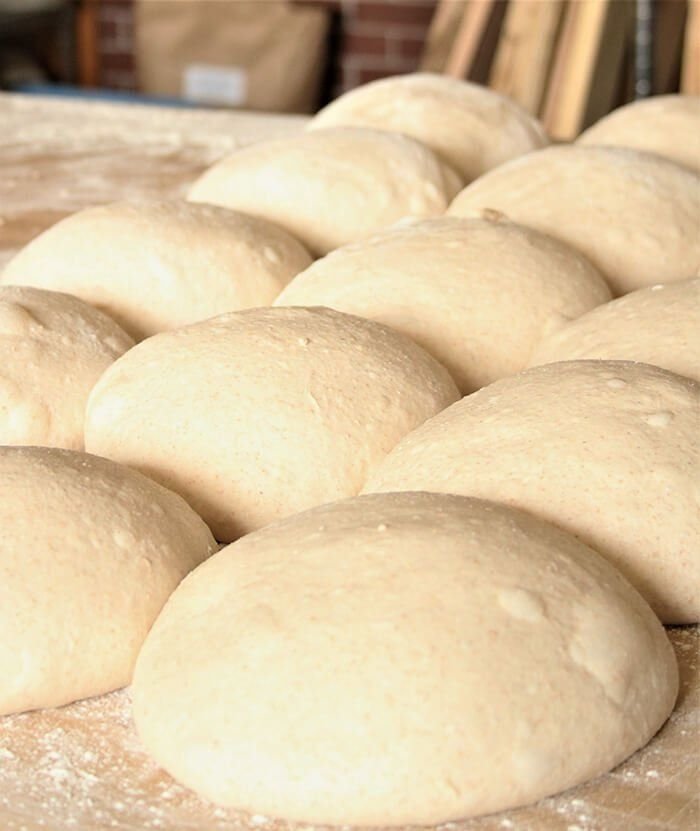
A resting period (usually 15-30 minutes) after pre-shaping. This allows the gluten to relax so the dough can be shaped into its final form without tearing or fighting back.

Bench Rest: pre-shaped dough rounds resting uncovered on a bench
ToolBeginner

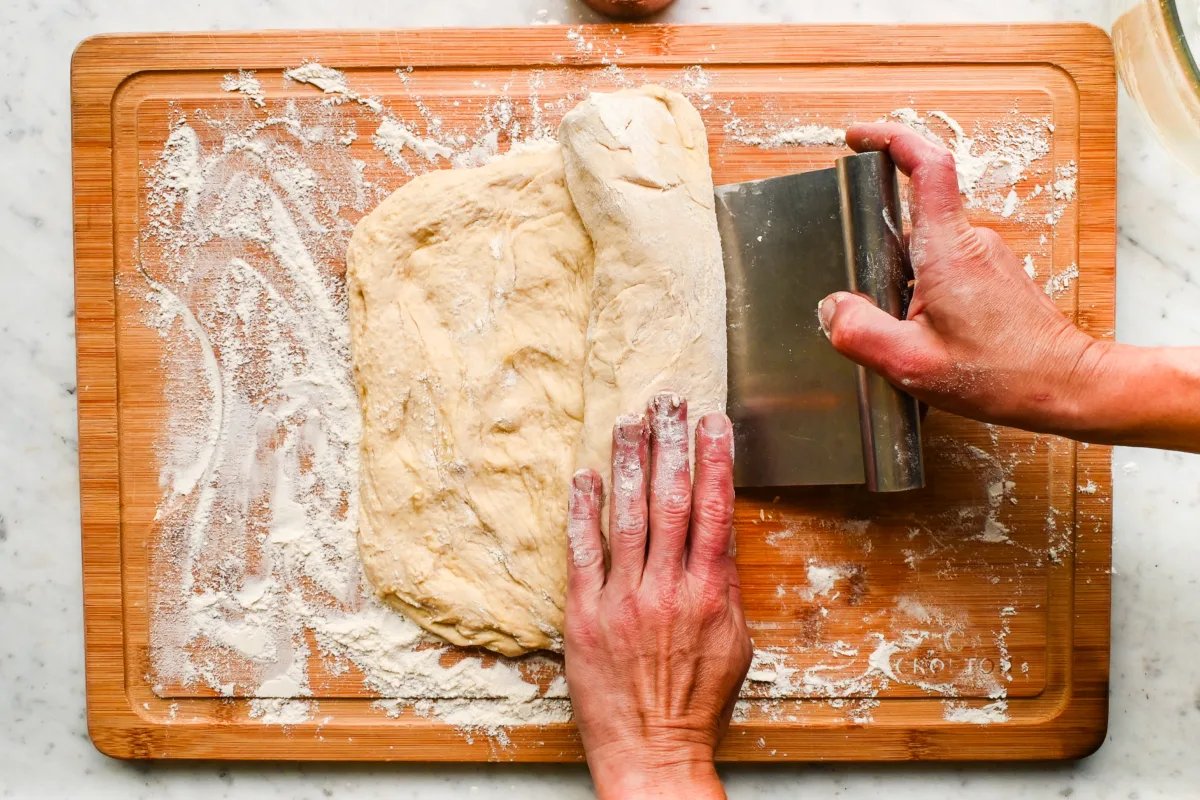
A flat, rectangular metal or plastic tool used to divide dough, scrape sticky bits off the counter, and help lift dough during shaping. For most bakers, it's the most-used tool on the bench.

Bench Scraper: metal bench scraper being used with bread dough

Some equipment and partner links are affiliate links. Henry may earn a commission from qualifying purchases.

Brød & Taylor Bench Knife
BreadIntermediate

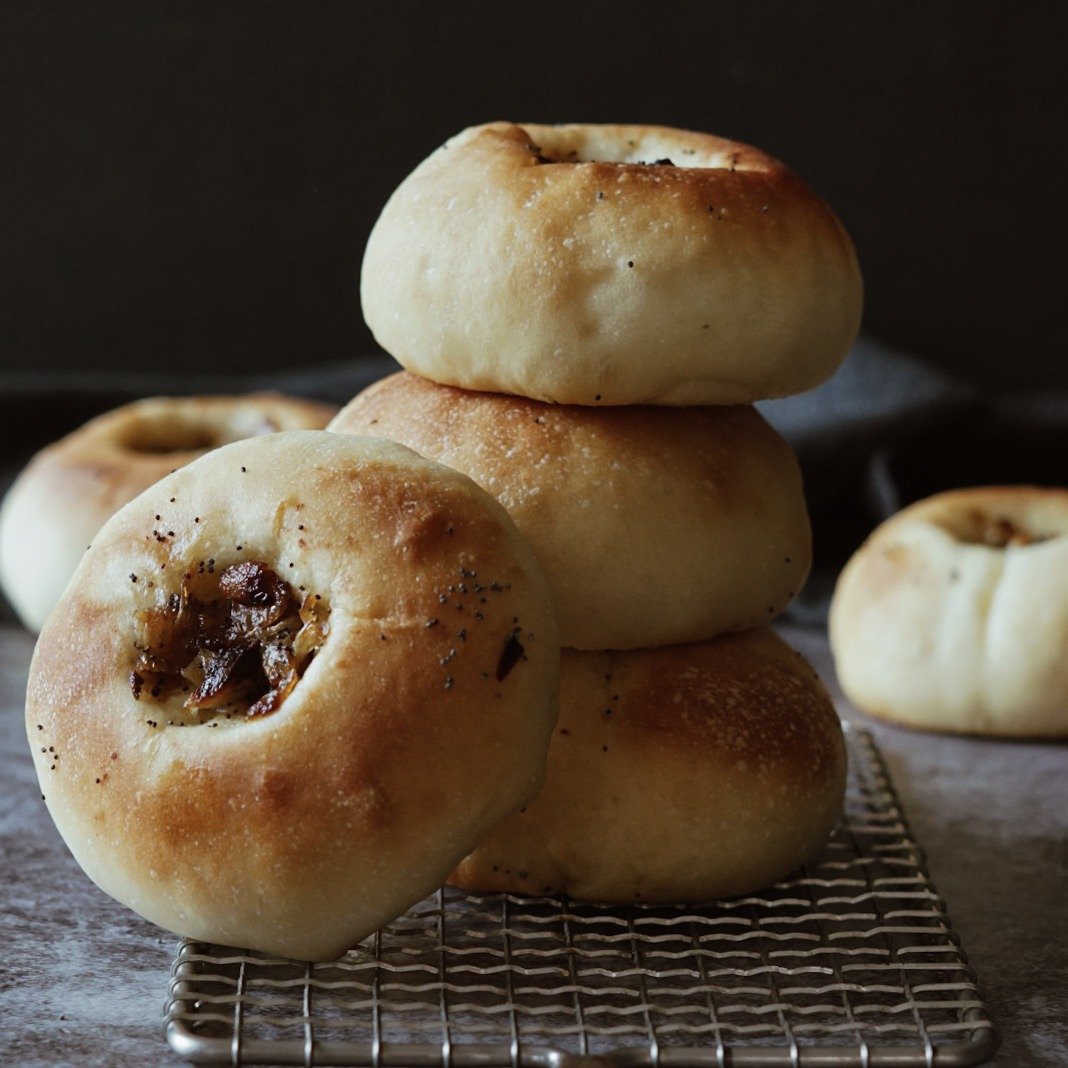
A cousin to the bagel, this round roll has a depressed center filled with cooked onions and poppy seeds. Unlike bagels, bialys are baked without being boiled first.

Bialy: bialy with onion and poppy seed topping
RelatedBagel
ProcessIntermediate

Biga

/ˈbiːɡə/

A stiff Italian pre-ferment made from flour, water, and a tiny amount of yeast. It is mixed into a firm dough and allowed to ferment for 12-16 hours before being added to the final dough to add complexity and strength.

Biga: mature stiff biga preferment showing structure
ProcessAdvanced

Tiny, crispy bubbles on the surface of the crust. They are highly prized by sourdough bakers and are usually achieved by a long cold fermentation (fridge proof) and a very hot bake.

TroubleshootingIntermediate

When a loaf bursts open in the oven somewhere you didn't plan, usually along the side, the bottom, or the seam, instead of along your score. The gas has to go somewhere, so it escapes at the weakest spot. It often points to underproofed dough, a score that was too shallow or too timid, or a seam that wasn't sealed.

Blowout: loaf showing a side or bottom blowout burst
IngredientIntermediate

Whole-grain flour that's been sifted to remove part of the bran, landing somewhere between whole wheat and white flour. It keeps much of the flavor of the whole grain while giving a lighter, more open crumb. Many home millers bolt their flour for baguettes, country loaves, and pizza.

Bolted Flour: whole flour beside sifted/bolted flour for comparison
TechniqueIntermediate

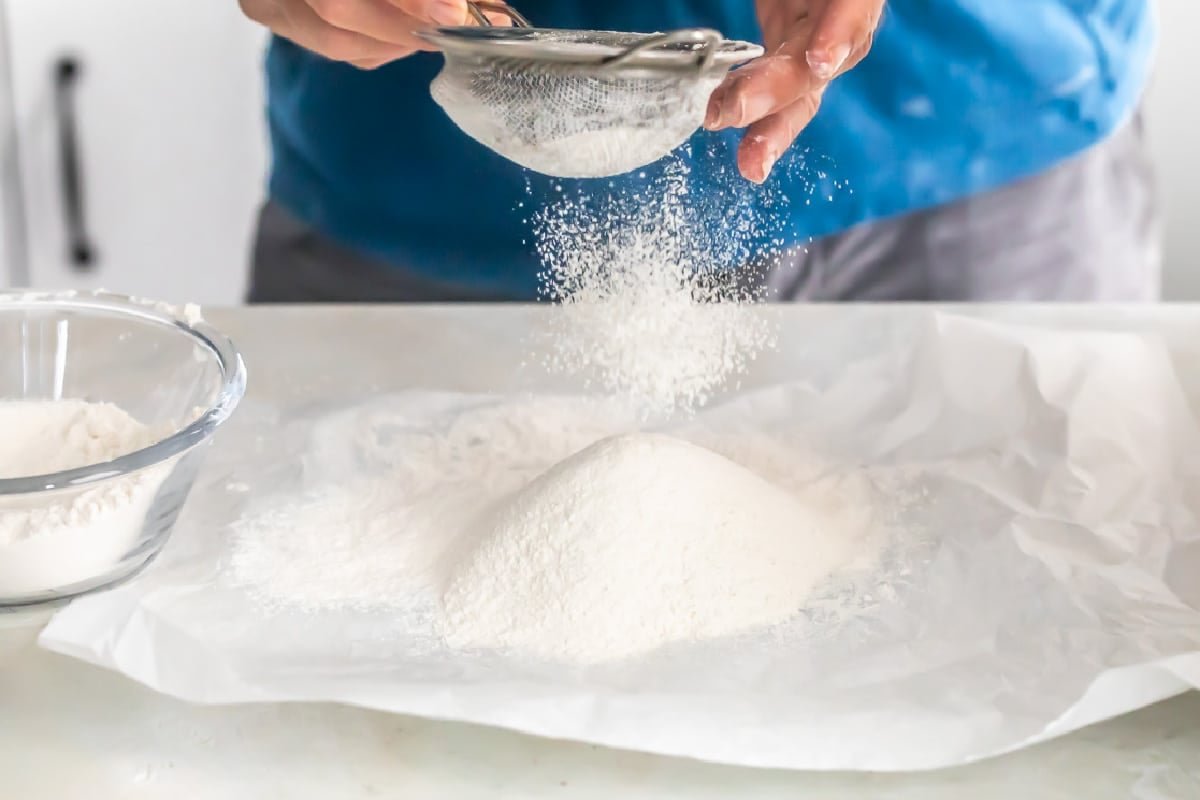
Sifting flour through a screen or cloth to remove some of the bran and germ. Mills have done it for centuries, and home millers do it with a sieve to get a lighter flour that still has whole-grain flavor. How much you remove depends on the screen and how many times you sift.

Bolting: hands sifting fresh-milled flour through a sieve
Related Tool
All 280 terms, A to Z
More matching terms are available above.

More from our kitchen

The definition is just the beginning.

Keep baking, exploring, and learning with the resources behind this guide.

Crust & Crumb | Interactive Bread Baking Glossary