
Underproofed
Shaped dough that needs more final proof before baking.
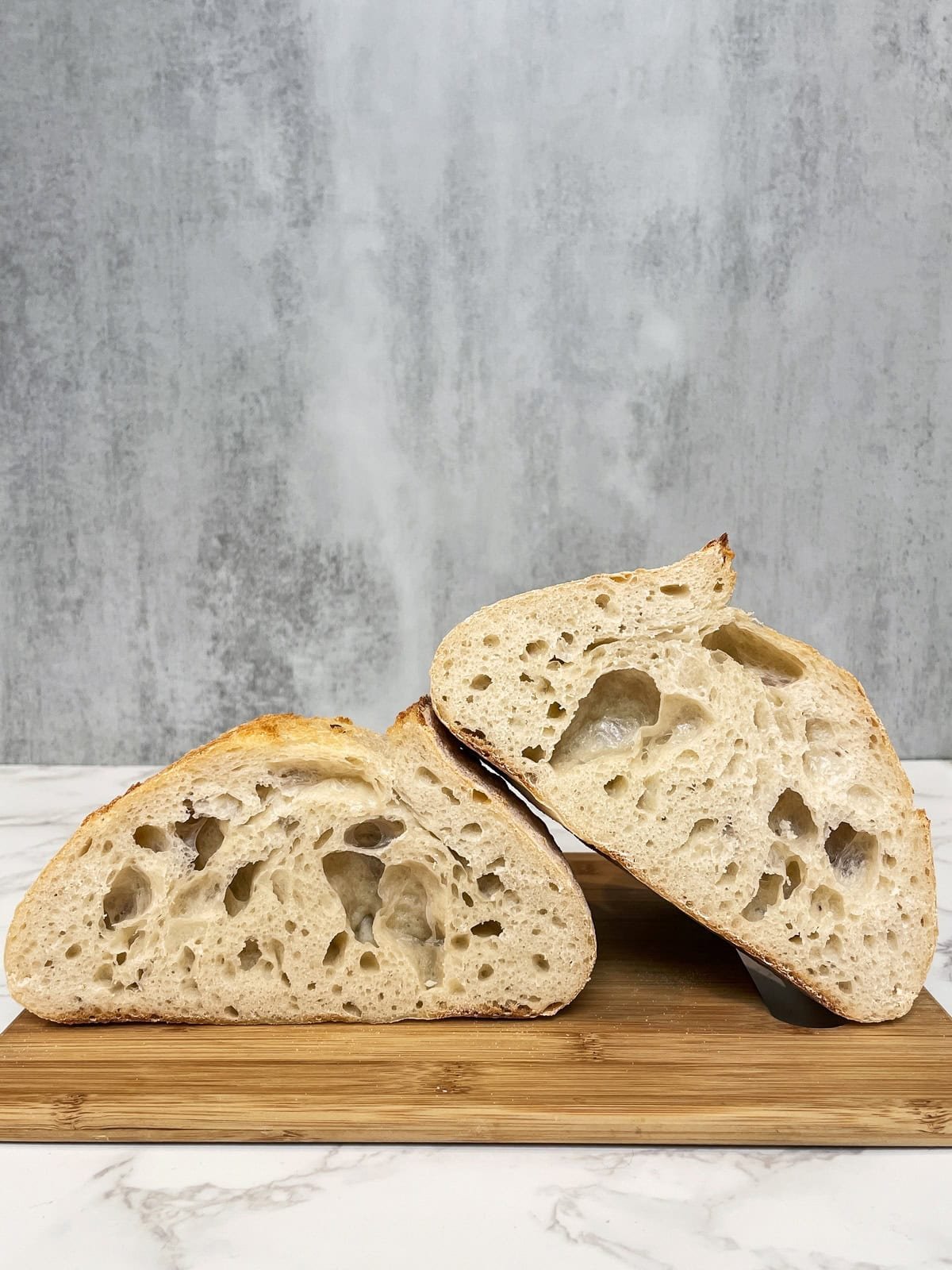
Shaped dough that has not had enough final proof before baking. It can bake up tight or burst where the surface offers the least resistance. In this glossary, underfermented refers specifically to bulk ending too soon.
By Henry Hunter · Updated · Sources last checked
Why it matters
Separating bulk from final proof helps you decide which stage to adjust on the next bake.
In practice
If a shaped loaf still feels tight and scarcely expanded, allow more proofing time within the recipe's conditions and check it again before baking.
What you'll see or feel
A quick spring-back from a gentle poke can be a clue in suitable doughs, but temperature and flour change that response. Combine it with expansion and feel.
A useful distinction
Bakers sometimes use underproofed for insufficient fermentation anywhere in the process. The narrower use here distinguishes the two stages; crumb alone cannot settle a diagnosis.
Put it into practice
Bulk Fermentation vs. Cold Retard: What Each Phase Actually DoesReferences for this entry
- Bulk Fermentation vs. Cold Retard: What Each Phase Actually Does
Baking Great Bread at Home · Henry Hunter. Supports: Bulk, cold fermentation, and reading dough in context.
- How to produce an open crumb in sourdough bread
King Arthur Baking · Maurizio Leo. Supports: Fermentation, folding, temperature, and dough handling.
Sources checked 2026-10-02 with AI assistance. This is not a claim of independent expert or Henry review.
Diagnose and fix
Bread is dense with small holes
Likely underproofed. Give it more time during bulk fermentation or final proof.
Common mistakes
- Changing final proof when bulk was the stage that ended too soon.
- Treating one poke response or photograph as proof of a single cause.
Connected terms
Watch it at the bench
Go deeper
More related reading (3)
- Cranberry Walnut Bread
Recipe Pantry
- No-Gap Cinnamon Swirl Bread
Recipe Pantry
- Henry's Overnight Sourdough English Muffins
Recipe Pantry